How to measure your space for a steel almirah
VIP Steel Furnitures, AgraUpdated: 12 min read
To measure your space for an almirah, you need three numbers: the width, the height (to the ceiling, or to the underside of a beam or loft), and the depth, meaning how far the almirah can come out from the wall. Measure the width and height in more than one place and write down the smallest, then photograph the space. That is enough for us to give you a rough rate. Before your almirah is made, we come and take the final measurement ourselves, free of charge in Agra.
- Width, height and depth
- Write down the smallest reading
- Free measurement visit in Agra
- Made to your size
On this page
How to measure for an almirah: the 3 numbers
Every made-to-size almirah starts from three measurements. Take each one in more than one place, because walls and floors are rarely perfectly straight.
| Measurement | Where and how | What to write down |
|---|---|---|
| Width | Wall to wall (or side to side of the niche), at the top, middle and bottom | All three, and mark the smallest |
| Height | Floor to ceiling at the left and right ends, or up to the beam or loft if there is one | Both, and mark the lower one |
| Depth | Out from the wall into the room, or for a niche, from the back wall to the front edge | How deep it can be, and the clear space left in front |
| Things on the wall | Skirting, switchboards, pipes, and any door or window nearby | Each one's size and its distance from the corner and the floor |
| Photos | One from the front showing the whole space, and one with the tape stretched across | Send both with your numbers |
These numbers are for a rough rate and for planning the design. The final measurement is taken on site before work starts. Not sure yet whether to get one made to size or buy readymade? Read custom vs readymade almirah: which suits you.
What you need: a tape, your phone and paper
- A steel measuring tape: the metal kind that locks. A tailor's cloth tape can stretch and sag over a long width, so the reading comes out wrong.
- Your phone camera: for a photo of the whole space, and close ones where the tape's numbers can be read.
- Paper and a pen: draw a rough box for the wall and write each reading where you took it.
- A helper and a stool: one holds the tape, the other reads it. Stand on something steady for the top readings.
Step by step: measuring the space
Clear the space if you can, so the tape sits flat against the walls and floor. Then take these readings one by one.
- Width at the top, middle and bottom. Measure wall to wall, or side to side of the niche, at three heights. The numbers often differ a little. Write all three and use the smallest, because the almirah has to fit the narrowest point.
- Height at both ends. Measure floor to ceiling at the left and right ends. If a beam or a loft (taand) runs over the space, measure to its underside instead. Use the lower number.
- Depth. Measure how far the almirah can come out from the wall before it blocks a bed, a door or the walking path. For a niche (aala), measure back wall to front edge, at the top and bottom.
- Skirting. Measure the height of the tile strip along the bottom of the wall, and how far it sticks out. An almirah pushed back touches the skirting first and leaves a gap above it.
- Switches and electrical points. For every switchboard, socket, wire or pipe on that wall, note its distance from the nearest corner and from the floor. A board hidden behind an almirah is no use, so decide which ones you will still need later.
- Doors and windows nearby. Note any door or window that opens towards the space. The almirah's own doors need clear floor too: a hinged door swings out about as far as it is wide.
- Ceiling clearance. If you want it up to the ceiling, say so, and note any beam, light or curtain rod. A tall almirah tipped upright inside a room needs a little more height than its own while it turns, so leave the final height to the maker.
- Uneven walls and floors. If the two heights differ, the floor or ceiling is not level. Check with a spirit level, or put down a marble and see which way it rolls.
- Corner spaces. Measure along each wall from the corner to where the almirah should end, and note any door or window on either wall. An almirah door right next to a side wall may not open fully, so say which way the doors should open.
The method is the same for a freestanding almirah and a wall-fit almirah built wall to wall. For a freestanding one, also measure the room door, the stairs and any tight turn on the way in.
Measuring a brick wall almirah for gates and a frame
A brick almirah is built into the wall by the mason, with an open front. For steel gates and a frame, you measure that opening. It is built by hand, so its sides are rarely perfectly straight.
- Each opening on its own. Two almirahs side by side can look the same and still measure differently, so number each one (1, 2, 3) and write its readings separately.
- Width at the top, middle and bottom, and height on the left, middle and right. Use the smallest of each.
- Depth of the side walls, where the frame will sit, and the depth inside to the back wall.
- Both diagonals, corner to opposite corner. If they match, and the top and bottom widths and the left and right heights match too, the opening is square. If not, note the difference.
- The shelves inside. Note the height of each stone or concrete shelf from the floor. It helps decide where the upper and lower gates split.
- Finished work only. If plaster, tiles or stone work around the opening is still pending, have the final measurement done after it, because it changes the size.
We make steel gates and frames for brick wall almirahs, with lockable gates for the upper and lower sections. Before making the gates, we come and measure each opening ourselves. In Agra this visit is free.
Measured roughly? Send it to us
WhatsApp a photo of the space with your rough numbers, or call Anil Garg on 98970 18245 to fix a free measurement visit in Agra.
A worked example (only an example)
Say you want a wall-to-wall almirah on one bedroom wall. The readings might look like this. These numbers only show the method: they are not a VIP size, and your wall will be different.
| What | Readings taken | Write down |
|---|---|---|
| Width | Top 7 ft 2 in, middle 7 ft 2½ in, bottom 7 ft 1½ in | 7 ft 1½ in, the smallest |
| Height | Floor to the loft: left end 7 ft 4 in, right end 7 ft 3 in | 7 ft 3 in, the lower one |
| Clear space in front (for depth) | 4 ft 6 in from the wall to the bed | 4 ft 6 in, minus a walking path |
| Skirting | 4 in high, sticks out ½ in, on all three walls | 4 in high, ½ in out |
| Switchboard | On the back wall, 1 ft 2 in from the right corner, 4 ft above the floor | Its position, and whether it is still needed |
Two things stand out. The bottom is narrowest because the skirting on each side wall takes half an inch. And the height at the right end is 1 in less, so the floor or the loft is not level. The maker needs to know both.
Your WhatsApp message for this wall can be just this: wall-to-wall almirah. 7 ft 1½ in wide, 7 ft 3 in high to the loft. 4 ft 6 in clear in front. 4 in skirting. Switchboard on the back wall near the right corner. Add two photos and that is enough for a rough rate.
Common measuring mistakes
Most wrong measurements come from a few small slips:
- Measuring the width or height only once, at the easiest spot.
- Forgetting the skirting, the beam or the loft.
- Not measuring the room door and stairs a freestanding almirah has to come through.
What to check before it is made, and why we measure ourselves
Rough numbers are enough to talk about the design and get a rate. Before the steel is cut, the person making it should check these on site:
- The smallest width and the lowest height, from fresh readings, not from a photo.
- Whether the space is square and level: the diagonals of an opening, the corners, and which end of the floor is lower.
- Depth and obstacles: the real depth after skirting, pipes or wiring, and where switchboards, doors and windows are.
That is why we come and measure ourselves, at no charge in Agra, especially for wall-fit almirahs and almirah gates. These are made for one space, so a mistake of an inch can't be fixed by moving them to another wall. We build to the size we measure. For what happens after the visit, see how ordering works with us.
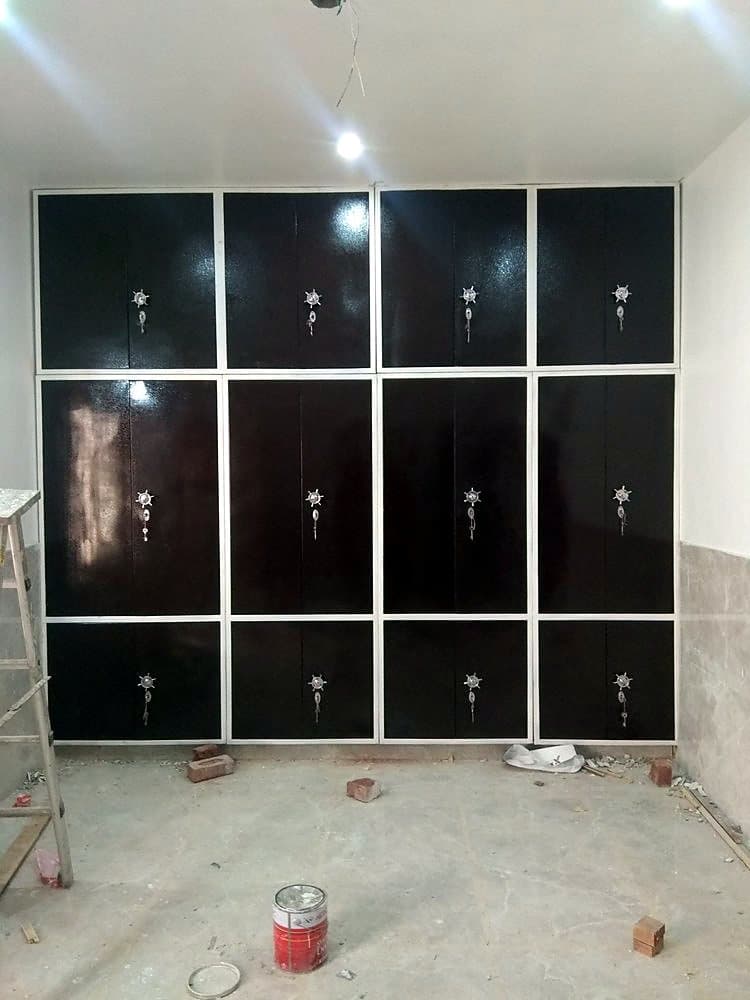
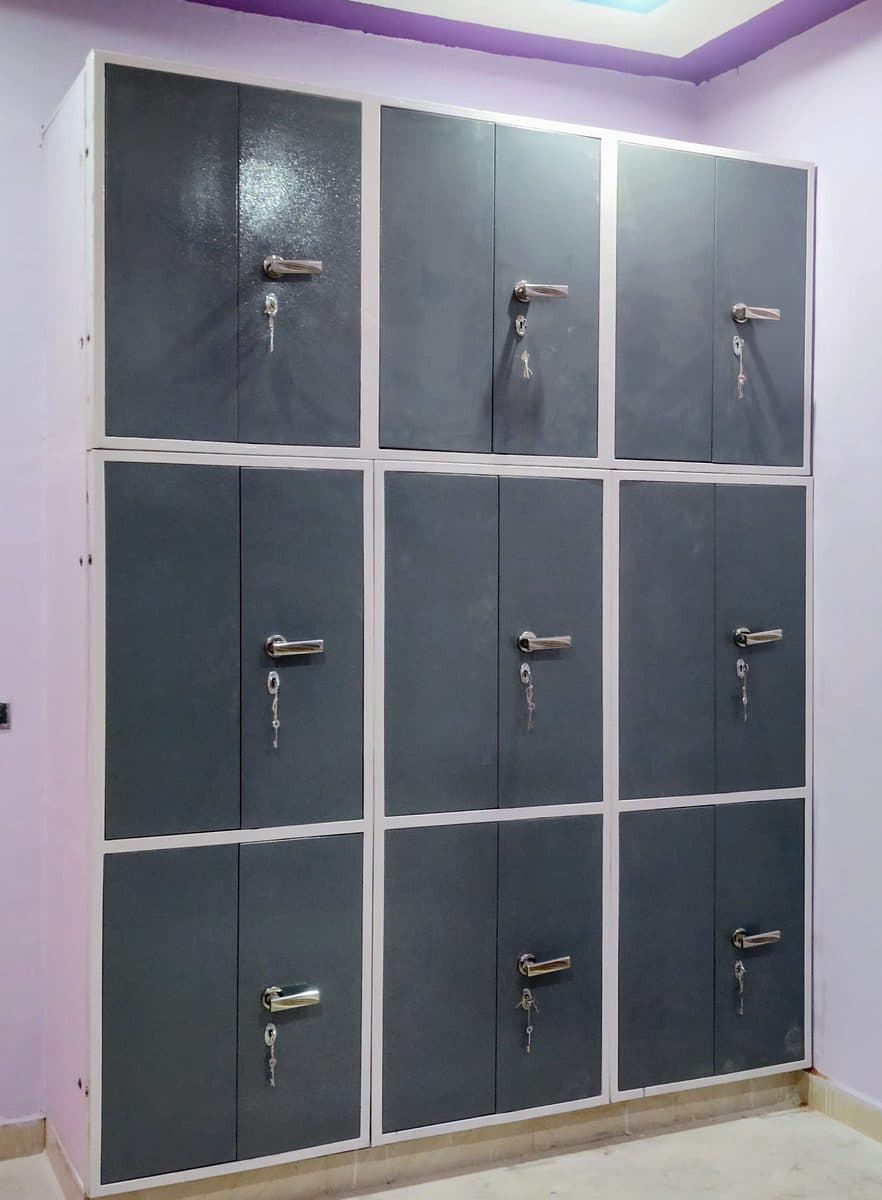
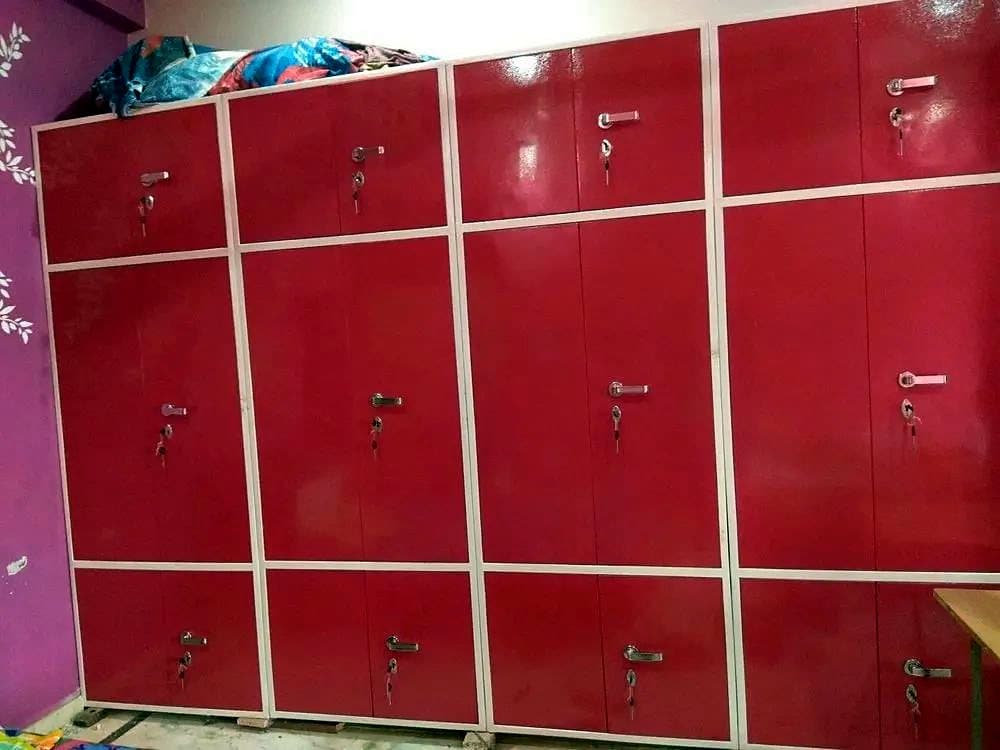
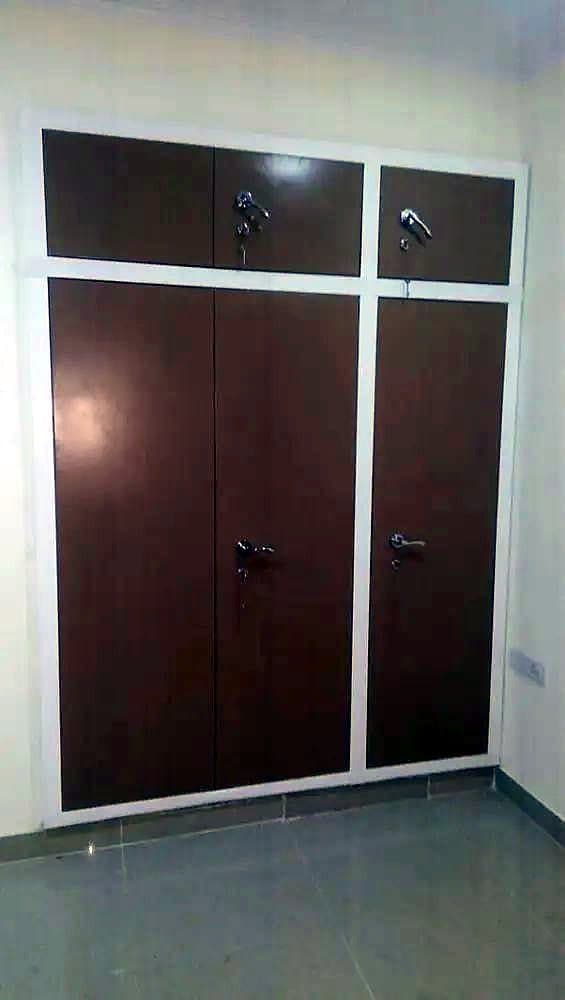
There is no fixed price list: the rate depends on size, sheet and design, as what decides a steel almirah's price explains. To see the kinds we make, look at our steel almirahs in Agra. Both photos below are our own wall-fit work.
What to send us on WhatsApp
Send these before you call or book a visit. It saves time on both sides.
Send these on WhatsApp
- A front photo of the whole space, from far enough back to show the floor, the ceiling and both sides
- A photo with the tape stretched across the width, with the numbers readable
- Your rough numbers: the width at three heights, the height at both ends, and the depth you have
- Close photos of anything on that wall: switchboard, skirting, pipe, beam or loft
- What you will keep in it: clothes, bedding, papers, valuables or shop stock
- What you want made: an almirah, a wall-fit almirah, or gates for a brick almirah
- Your area of Agra, so we can fix a time to come and measure
WhatsApp the photos and numbers to us on 98970 18245. We will tell you the rate and fix a time for the free measurement visit.
Frequently asked questions
Do I have to measure myself, or will you come?
You don't have to. In Agra we come to measure for free, and the almirah is made to the measurements we take ourselves. Your rough numbers just help us give you a rate sooner. Call Anil Garg on 98970 18245 to fix a time.
Should I measure in feet and inches or in centimetres?
Either works; just write the unit next to every number. Feet and inches are what most people here use. Don't mix the two in one list, and write each number out in full: 7 ft 10 in, not 7.10.
Should I measure before or after the plaster and tiles are done?
The final measurement should be done after, because new plaster, wall tiles, flooring or skirting change the size of the space. If work is still going on, send rough numbers now for a rate, and have the final measurement done once it is finished.
Can you tell me the rate from my rough measurements?
Yes. WhatsApp us a photo of the space and rough measurements and we will tell you the rate. The final size, design and price are agreed with you after we measure, before work starts.
There is a switchboard where the almirah will go. What should I do?
First decide whether you will still need that board later. If you do, either the almirah stops short of it, or you get an electrician to move the board before the final measurement. Either way, mark its position on your photo.
Do you also measure brick almirahs for gates?
Yes. Every brick almirah is built by hand to its own size, so we come and measure each one ourselves, free, before making the gates and frame.
Can I just measure my old almirah instead?
Measure the space, not the old almirah: the new one is made to fit the wall, niche or corner. The old one is often smaller than the space. If you like its size, send its numbers too, along with the space.
Read next
- ProductWall-fit steel almirahs, made wall to wall to your measurementsWall-fit steel almirah in Agra, made to the exact size of your wall, niche or corner. Free measurement visit, own factory, free delivery in Agra city.
- ProductSteel gates and gate frames for brick wall almirahs in AgraAlmirah gate maker in Agra: steel gates and frames for brick wall almirahs, made to your size in our own factory. Free measurement visit, free Agra delivery.
- GuideCustom steel almirah or readymade: which should you buy?Custom steel almirah or readymade? When readymade is enough and when made to size is better. Free measurement visit in Agra, built in our own factory.
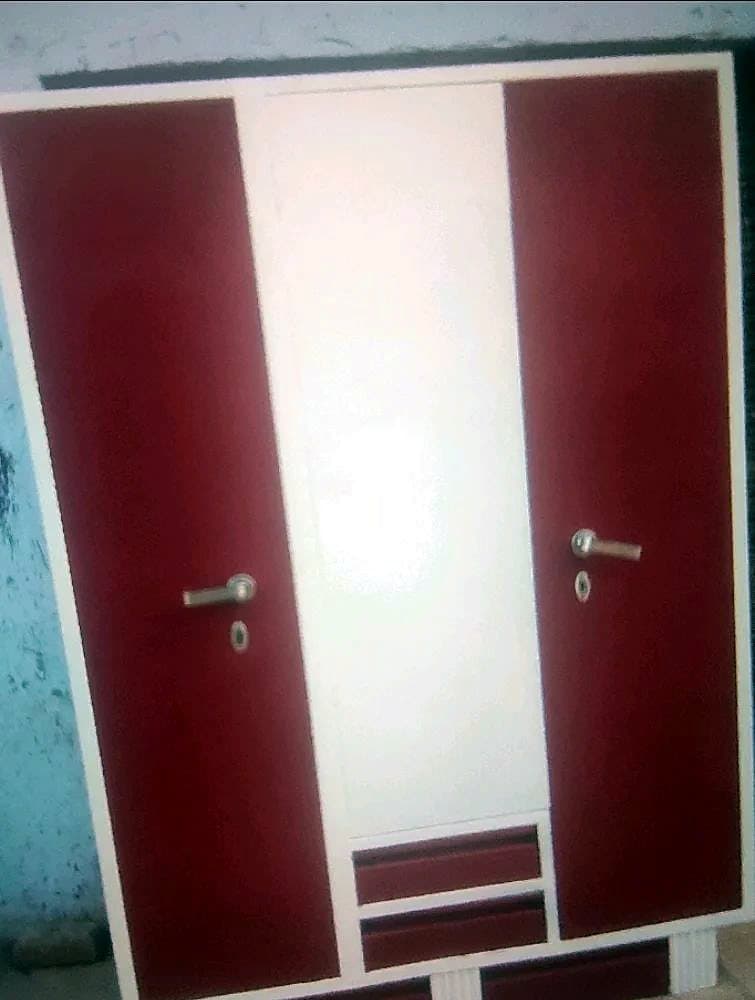 ProductSteel almirahs in Agra, made to your sizeSteel almirah in Agra, made to your size in our own factory: 2-door, 3-door, mirror, locker and office almirahs. Free measurement and free delivery in Agra.
Send us your rough measurements
WhatsApp a photo of the space and your rough numbers to 98970 18245, or call to book a free measurement visit in Agra.